
SRS for FEM software
…using sustainable design
The Software Requirements Specification (SRS) for FEM software are only possible proposals.
1. Compact Input Receipt
Provide a concise and complete Input Receipt that allows the analysis to be fully recreated in the future, either in the same software or in a different.
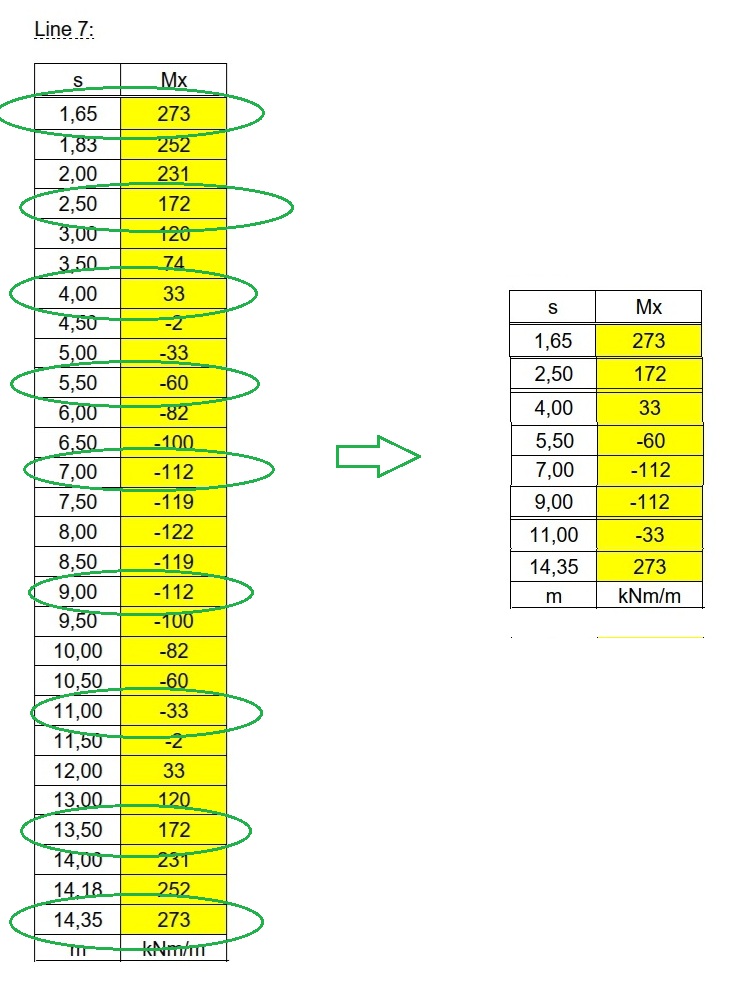
2. Result extraction along arbitrary lines
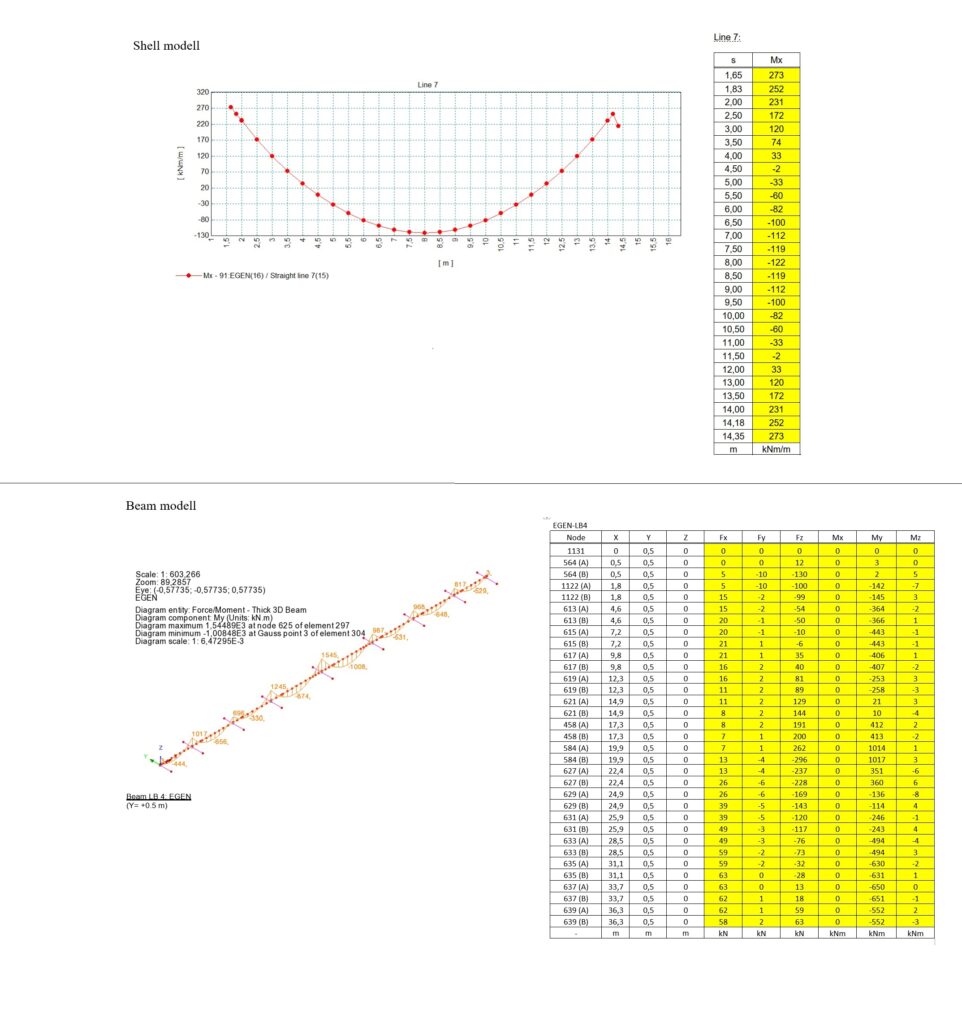
Enable presentation of load effects along user-defined result lines. Results should be exportable in tabular form at specified intervals, typically at distances of L/8 for each span. This important to minimize report size.
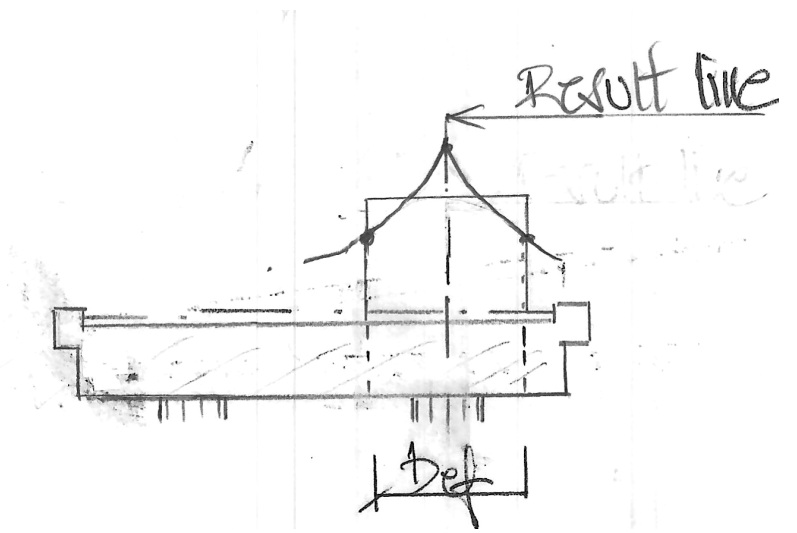
3. Averaging of results in concrete shell structures
For shell structures, extraction of load effects along defined result lines using weighted averaging over a specified strip width (effective width). This important to minimize report size and design load effect.
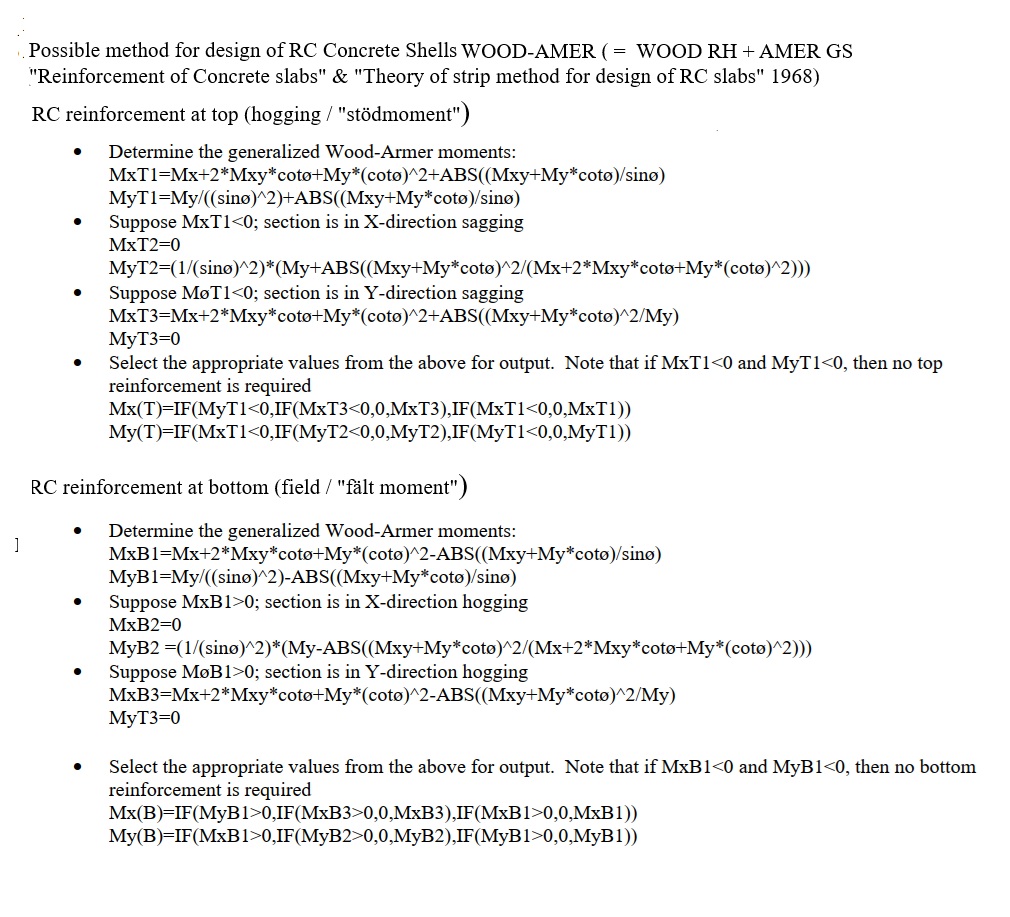
4. Transformation of design forces in concrete shell structures
Allow transformation of design forces :
– Design moments according to local directions of reinforcement and moments.
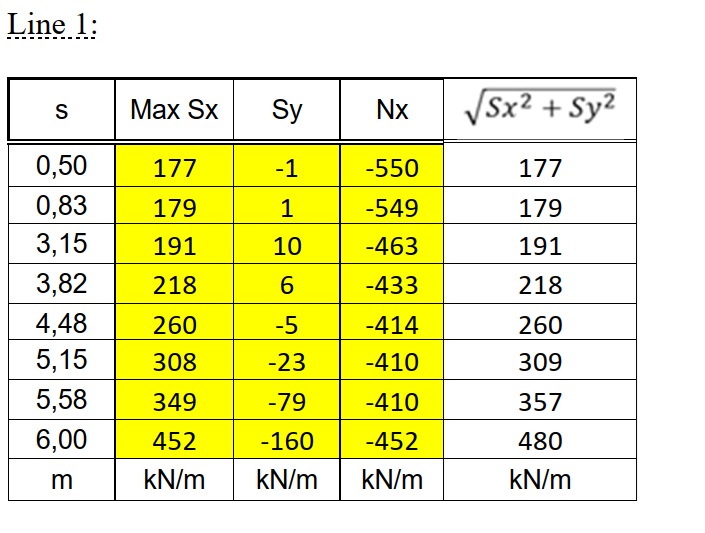
– Design shear forces according local directions of shear reinforcement and forces.
5. Automatic traffic load positioning: longitudinal & transverse direction
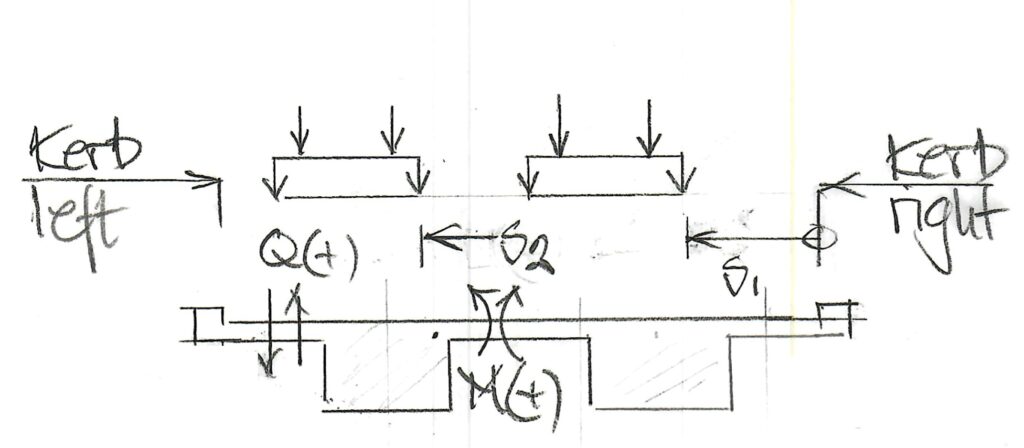
Support automatic positioning of traffic loads to determine governing load effects in both longitudinal direction, and transverse direction. This by defining traffic load movement in longitudinal and transvere direction. The later by defining kerbs left and right. Very important when retrieving load effect in transverse direction for none slab bridges as seen below.
6. Tabular result presentation with location
Present load effects in table format with location presented witheither global coordinates (X-Y-Z), or relative distances (s) along result line. This to facilitate review.
7. Advanced load combinations
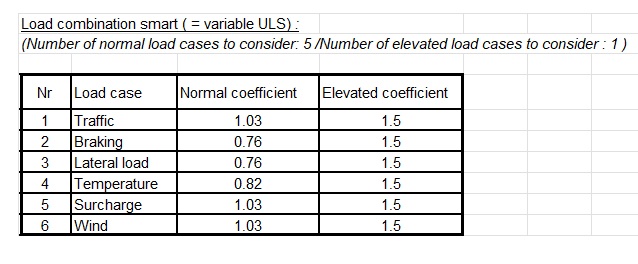
Capability of handling complex load combinations, including limiting the number of simultaneously acting load cases and applying elevated load coefficients to a specified number of governing loads.
8. Workflow for creation of FEM models: Traditional & Wizard
Give clients ability to quickly create FEM models using a speedy Wizard workflow with “Grasshopper” or “Python”, as a complementary capability to transparent Traditional workflow. Both capabilities are very important to maintain engineering competence and efficiency.
9. Varying structural systems and loading
Handle different structural systems, both static and dynamic, in 2D and 3D, as well as linear and nonlinear geometric behavior is important. This since, needed to handle loads and structural systems that vary over time. This requires access to various types of FEM elements and ability of deactivation.
10. Varying material properties
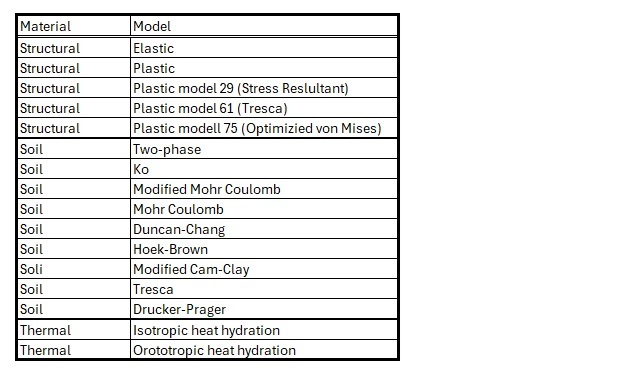
As computing power increases, there is the possibility of performing complex FEM analyses where structures interact with the surrounding soil material. It is therefore important that FEM programs can handle both geotechnical and structural materials. The aim of more sofisticated FEM analysis is reducing use of building materials.
The ability is believed crucial for a possible come-back of masonary (stone) bridges. Also important when analysing soil excavation during construction.
11. Load capacity according to applicable code
Determine load capacity and utilization ratio in accordance with applicable code.
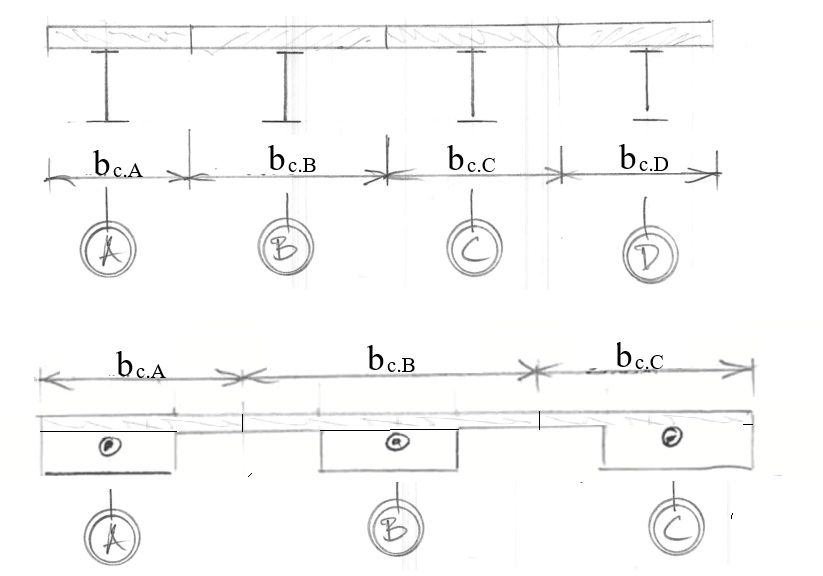
12. Equivalent section forces associated to shells and beams & volume elements (solides)
Ability to determine equivalent section forces over a given width ( bc) by integrating load effects in shells and beams & volume elements.
13. Software manuals
In order to review and recreate bridge design, manuals are needed, both user & theory.
14. Cable tuning analysis
The design of a cable-stayed structure requires the capability for cable tuning analysis to optimize cable forces necessary for achieving a flat superstructure under permanent load.
15. Concrete heat hydration analysis
The ability to handle transient analysis of nonlinear materials is essential for analyzing early-age cracking. The material properties should also consider the effects of early-age shrinkage due to evaporation (drying shrinkage) or chemical reactions (autogenous shrinkage). Additionally, the capability to work in 3D and determine the risk of cracking and crack width is necessary.
16. Software that can handle many needs
It is advantageous if one software solution can handle geotechnical, road, and structural engineering, including concrete heat hydration analysis. To achieve this, it would be useful if the software has a wide range of FEM elements capable of static and dynamic analysis, including nonlinear material behavior. Preferably, it should support both 2D and 3D design.
.
17. Software for both understanding & speed
It is advantageous for software to provide a traditional workflow (generally drag-and-drop) to facilitate understanding while also enabling experienced designers to create their own parameter-driven wizards using a common programming language, such as Python. This capability is important because the wizards provided by software suppliers do not always enhance understanding or support future developments.
Having ability to “record” traditional workflow as a programming “script” using Python is considered valuable.
Additionally, few software suppliers assume responsibility for the results generated.
18. Introduction of new FEM software
Before introduction of new FEM software results must be proven against existing FEM software.
19. Grasshoper “plugin”
Parameter-driven design is important as it enables the connection of variables in 3D CAD software to 3D FEM software. This capability enhances speed and efficiency; however, caution is needed to minimize risks and manage them effectively.